





Metal-Free Safety Shoes: When Composite Toe and Non-Metallic Midsoles Make Sense
Metal-free safety shoes are not just a lighter alternative to steel toe boots. For some workplaces, they solve a very practical problem: workers need protective footwear that can pass through metal detector areas, reduce cold transfer, avoid corrosion concerns and still meet the required safety target. For buyers, the challenge is knowing when a metal-free design is useful, when steel still makes sense, and how to avoid treating “non-metallic” as a shortcut for every jobsite.
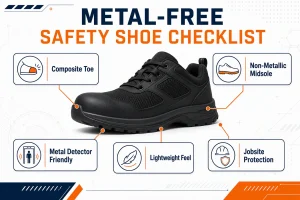
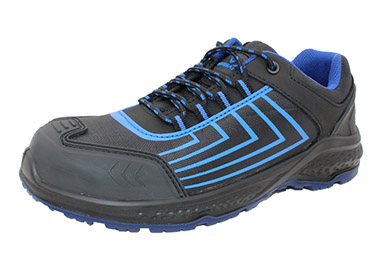
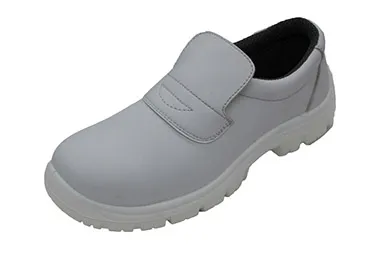
Metal-free safety shoe checklist with composite toe non-metallic midsole and detector friendly features
What does metal-free safety footwear usually mean?
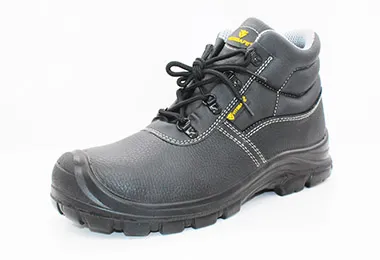
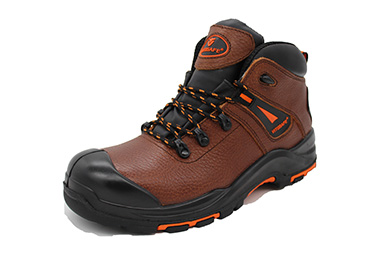
In safety footwear, metal-free normally means the protective components are made without steel or other metallic parts. The toe cap may be composite, fiberglass or another non-metallic material. The puncture-resistant layer may be textile or another flexible non-metallic material instead of a steel plate. Hardware such as eyelets may also be designed to avoid metal, depending on the product specification.
That does not mean every black work shoe with a composite toe is fully metal-free. Some shoes still use metal eyelets, shanks or small hardware. For buyers who need footwear for metal detector areas, the full bill of materials matters. The safest purchasing question is not only “Is the toe cap composite?” but “Is the complete shoe designed as metal-free?”
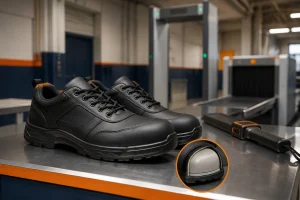
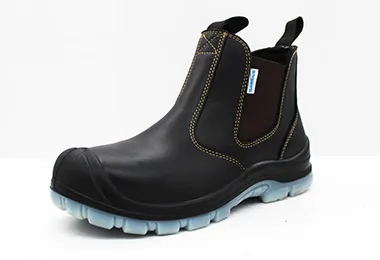
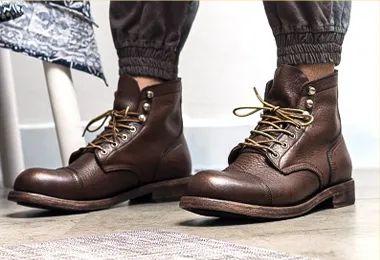
Metal-free safety shoes shown at an industrial security checkpoint with detector equipment
Where metal-free shoes make the most sense
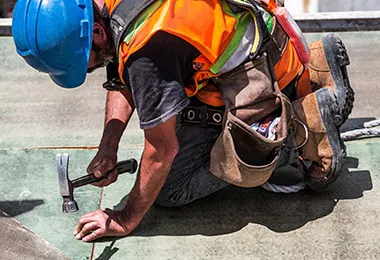
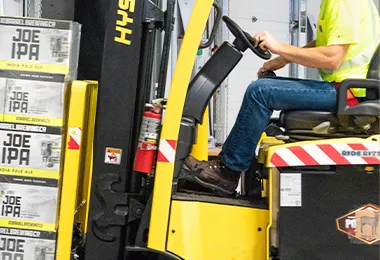
Metal-free safety shoes are useful in workplaces where metal detection is part of the daily workflow. Examples include airport logistics, secure warehouses, electronics factories, food facilities, clean assembly areas and some transport or distribution centers. In these places, footwear that repeatedly triggers metal detectors can slow workers down and create unnecessary checks.
They can also be useful in cold environments because non-metallic protective parts usually transfer less cold than steel. This does not automatically make the whole shoe a winter boot, but it can improve comfort in low-temperature areas when combined with the right upper, lining and outsole. For workers who stand or walk for long shifts, the lighter feel of some composite constructions may also improve daily acceptance.
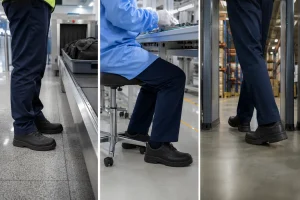
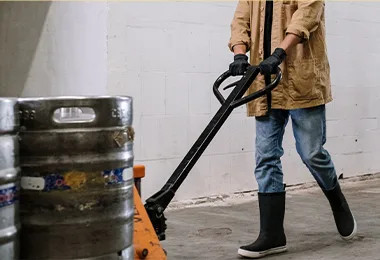
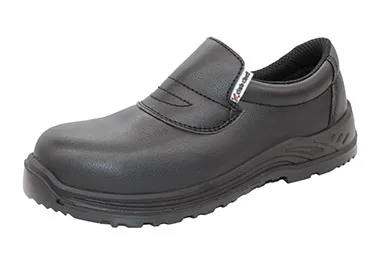
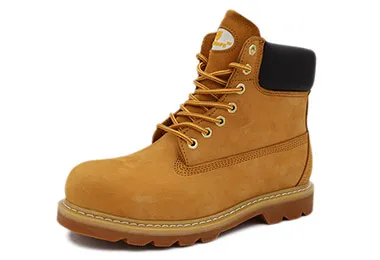
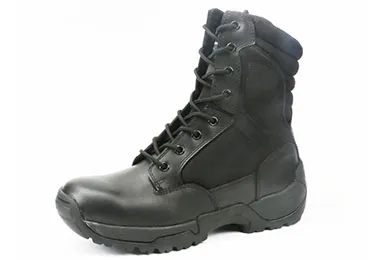
Metal-free safety shoes used in security checkpoint electronics factory and warehouse detector gate settings
Composite toe is not the same as soft toe
One common misunderstanding is that non-metallic toe protection is weaker simply because it is not steel. In a properly designed safety shoe, a composite toe cap is still a protective component. The important point is whether the shoe is tested and specified for the target market and job hazard. Buyers should check the required standard, size range and documentation instead of judging only by material name.
Composite toe caps may be attractive where metal detection, weight or temperature transfer matter. Steel toe caps may still be preferred in some heavy-duty industrial settings because of cost, availability or buyer familiarity. The best choice depends on the work risk, market requirement and product design, not on a simple “steel versus composite” slogan.
Non-metallic midsoles and puncture risk
If puncture risk is part of the job, the midsole decision matters. A metal-free shoe may use a textile puncture-resistant layer instead of a steel plate. This can improve flexibility and reduce metal content, but buyers still need to confirm the protection level required for the jobsite. Warehouses with packaging debris, renovation areas with screws, or logistics floors with pallet nails may need puncture protection even when the shoe must remain metal-free.
The right approach is to describe the floor hazards clearly to the supplier. Are workers stepping near nails, wires, metal scraps or broken pallets? Is the risk occasional or constant? Do workers need to pass through metal detectors several times a day? These details help decide whether a non-metallic puncture-resistant midsole should be included.
Metal detector friendly does not mean protection-free
Some buyers ask for “airport friendly” or “security friendly” work shoes and only focus on passing through a detector. That is not enough. If the workplace also requires toe protection, slip resistance, puncture resistance, water resistance or electrical properties, the shoe still needs to meet those requirements. A shoe that passes a detector but fails the job hazard is not the right product.
This is why metal-free safety shoes should be specified from both directions: the access-control requirement and the workplace hazard. For example, an electronics factory may need metal detector compatibility and antistatic properties. A logistics warehouse may need composite toe protection and slip-resistant outsoles. A secure outdoor site may also need water-resistant uppers and stronger tread.
Questions buyers should ask before ordering
Before placing a bulk order, buyers should confirm whether the shoe is fully metal-free or only uses a composite toe. Ask about the toe cap, midsole, eyelets, shank and any hidden components. Ask which standard and test documents are available for the target market. Ask whether the outsole and upper are suitable for the actual floor, climate and shift length.
It is also useful to test samples in the real access-control process. If metal detectors are part of the reason for choosing the shoe, do not rely only on catalog wording. Let workers test the sample through the actual checkpoint if possible. At the same time, collect feedback on fit, weight, flexibility and grip so the decision does not focus only on detector performance.
How Vitosafe supports metal-free safety shoe projects
Vitosafe helps buyers develop metal-free safety shoes by matching the material structure to the actual workplace. For distributors, security-related users and private-label programs, we can discuss composite toe options, non-metallic puncture-resistant layers, outsole design, fit expectations and target-market documentation before production.
The goal is not to replace every steel component in every shoe. The goal is to build a product that solves the buyer’s access-control or comfort problem while still protecting the worker. If your market needs safety footwear for metal detector areas, electronics plants, airport logistics or secure warehouses, Vitosafe can help turn that requirement into a practical product specification.
